
"I Can't Even Lift the Kettle Anymore." The Shoulder Pain That Slowly Took Over Everyday Life.
Topic: Shoulder impingement, rotator cuff related shoulder pain, (frozen shoulder differential).
This story is inspired by the many people we've cared for over the years. Names and details have been changed and combined to protect privacy. If you recognise yourself in this story, you're certainly not alone.
Sarah’s story
Lets talk about Sarah. Sarah never thought twice about making a cup of tea. It was part of her morning. Kettle on. Mugs out. Milk from the fridge. It was automatic, something she'd probably done thousands of times without giving it a second thought. She looked after herself. She went to the gym three times a week, enjoyed long walks at the weekend and was usually the person helping everyone else. Her shoulder wasn't something she'd ever had to think about.
Over a few weeks, the tip of her shoulder gradually started hurting. "This is ridiculous. I go to the gym every week, but I can't even pour myself a cup of tea anymore." It wasn't just lifting the kettle, it was reaching into the cupboard, drying her hair, pulling on a jumper, putting on her seatbelt, just doing normal daily things. The kettle just happened to be the moment she thought there is something really wrong here.
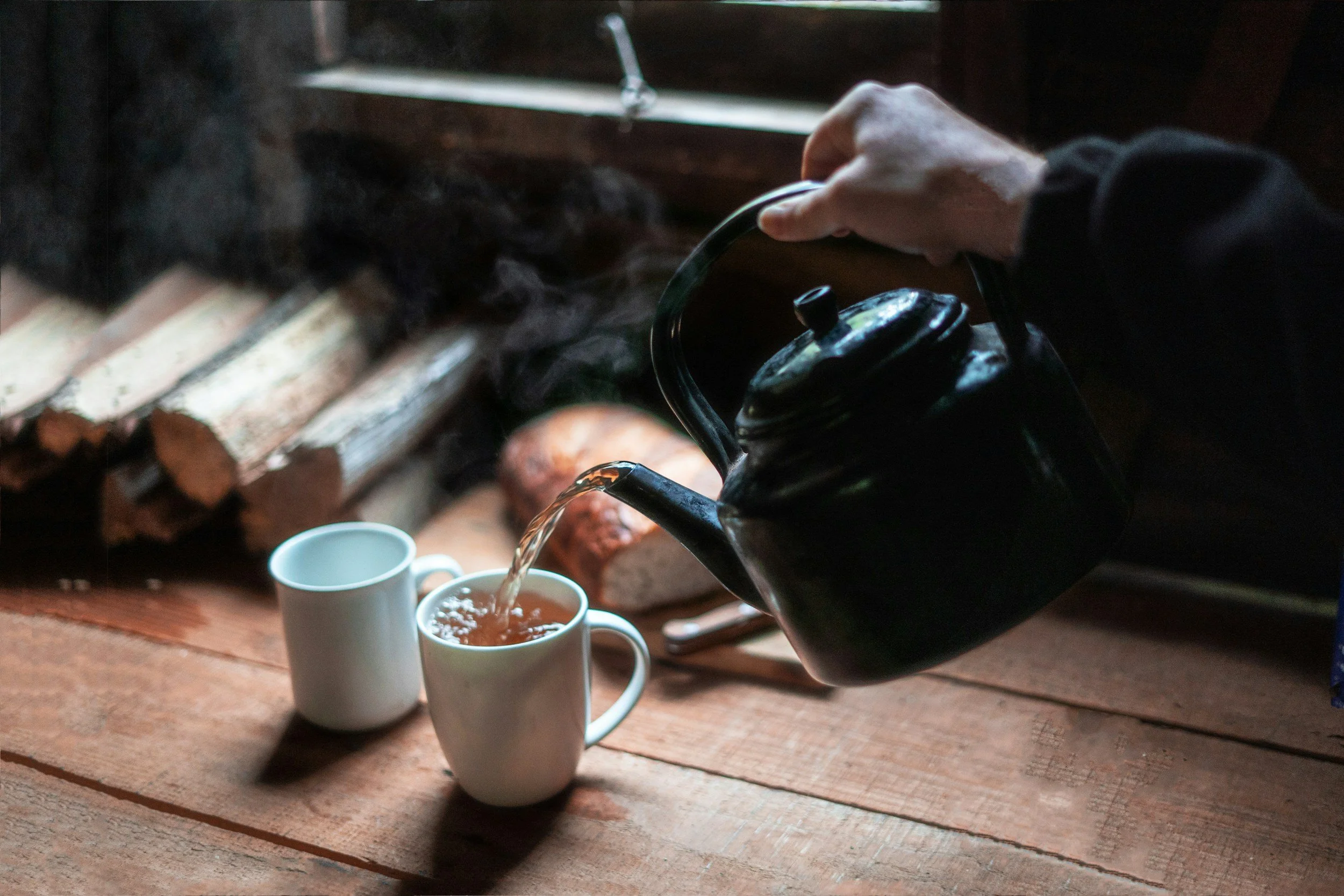
At first, she ignored it like all of us do. We see if it will go away by itself. So she started using the other arm, avoided sleeping on that side, skipped a few exercises at the gym. She even convinced herself it was probably because she'd slept awkwardly.
Weeks passed.
Then months.
Instead of getting better, her world became a little bit smaller. Without even noticing, she'd started planning her day around what her shoulder might let her do.
Then she came to Evolv
By the time Sarah walked into the clinic, she was looking for answers:
"Do you think I'll need surgery?" she asked. "Or is this just what life is going to be like now?"
Those weren't silly questions. When pain has been hanging around for weeks or months, it's easy to let your mind jump to the worst case scenario. Rather than rushing straight into treatment, we spent time talking. We wanted to understand Sarah, not just her shoulder. We spoke about when the pain had started, what made it worse, what she'd already tried, what she was worried about and, just as importantly, what she wanted to get back to doing. Only then did we move on to a thorough physical examination. What we found was actually reassuring. Sarah's shoulder wasn't worn out or "giving up." She had a very common issue that we see all the time.
Diagnosis - Shoulder impingement
The assessment suggested that one of the muscles that helps lift and control the shoulder, called the supraspinatus, had become irritated. The subacromial bursa, a small fluid filled cushion that helps the tendons glide smoothly beneath the roof of the shoulder, was also likely contributing to her symptoms.
When these tissues become irritated, lifting the arm can temporarily reduce the space available for them to move comfortably. That's why reaching into a cupboard, getting dressed or pouring a kettle can suddenly become surprisingly painful.
Despite what many people believe, this doesn't automatically mean anything is torn or permanently damaged. In fact, shoulders are remarkably adaptable. The challenge with shoulder impingement is that supraspinatus gets weaker and sensitive.
For Sarah, that was one of the biggest turning points. Understanding why it hurt helped replace fear with confidence.
Next steps for Sarah
Rather than trying to force the shoulder through pain or avoiding movement altogether, we focused on helping it move more comfortably again.
Treatment included hands on therapy to settle the irritated tissues and improve movement, alongside a progressive rehabilitation programme designed to rebuild strength, confidence and control.
There wasn't a magic moment where everything suddenly felt normal. Instead, there were small wins. One week she noticed she could reach the top shelf more easily. The next she realised she'd dried her hair without stopping halfway through. Then one morning she picked up the kettle without thinking about it.
Perhaps the biggest change was that she no longer believed she was damaging it every time she moved.
That confidence gave her permission to start living normally again, and her shoulder continued to improve because of it.
