
“I Sneezed... and My Back Went." He Thought One Sneeze Had Broken His Spine.
Topic: Acute pain, disc herniation, low back pain, sciatica
This story is inspired by the many people we've cared for over the years. Names and details have been changed and combined to protect privacy. If you recognise yourself in this story, you're certainly not alone.
Mike’s story
Mike had just made himself a cup of coffee. He wasn't lifting anything heavy, he wasn't in the gym, he wasn't doing anything particularly exciting. He sneezed.
The pain hit him instantly. It wasn't the sort of pain you wince through. It took his breath away. His legs gave way beneath him and he collapsed onto the kitchen floor. He tried to push himself back up but his back felt completely locked.
Every tiny movement sent an intense pain through his lower back and into his left buttock. Within minutes, the pain had started travelling down the back of his leg. His calf burned, his foot tingled and he couldn't find a position that felt comfortable.
He was convinced something had broken. He shouted for help.
"Ben... I can't move."
Upstairs, his husband Ben heard him scream. He ran downstairs to find Mike lying on the kitchen floor, pale, sweating and barely able to move. Ben was terrified and tried to help him up but every time Mike tried to roll over, the pain became unbearable.
Ben did what most people would do and called an ambulance. The wait felt like hours.
Mike lay exactly where he'd fallen because every movement made the pain shoot further down his leg.
He started imagining the worst.
"What if I've broken my back?"
"What if I never walk properly again?"
"What if I'm paralysed?"
Pain has a remarkable way of convincing us that the worst-case scenario must be true.
When the ambulance arrived
The paramedics immediately started assessing Mike. Slowly and carefully, they helped him into a more comfortable position before carrying out a thorough assessment. They asked him to move his feet, checked the strength in his legs, tested the feeling in his feet and lower legs. Asked about changes in his bladder or bowel function and whether he had any numbness around his saddle area. Fortunately, none of these symptoms were present.
Although Mike was in severe pain, there were no signs suggesting a medical emergency requiring immediate transfer to hospital. They advised him on pain relief, encouraged gentle movement within his tolerance rather than prolonged bed rest, explained the warning signs that would require urgent medical attention, and recommended that he arrange further assessment if his symptoms didn't begin to improve. The ambulance left.
Mike was relieved he hadn't broken his spine and there was nothing serious. But to him this was still one of the worst experiences of his life.
That night Mike couldn’t sleep. Every time he turned over, he woke himself with pain. Getting up and walking to the bathroom became an expedition. Putting socks on was impossible. Standing long enough to brush his teeth was exhausting.
By Monday morning, Ben called our clinic. Helping Mike into the car took almost twenty minutes. He couldn't sit upright. Every bump in the road sent pain shooting down his left leg. When he finally walked through our door, you could see he was struggling.
Seeing us at Evolv
The first thing we did with Mike was listen. When someone is in that much pain, it's difficult to concentrate, remember details or even know where to begin. So we took our time.
We talked through exactly what had happened, how his symptoms had changed over the weekend and, importantly, screened for symptoms that might suggest a more serious condition, including cauda equina syndrome. Mike wasn't experiencing changes to his bladder or bowel function, numbness around the saddle area or progressive loss of strength that would require emergency referral, which was reassuring.
We then carried out as much of a physical examination as Mike could comfortably tolerate. Even within those limits, the assessment told us a great deal. His back movement was extremely restricted. Certain positions reproduced the pain travelling into his leg. His neurological examination showed changes affecting the left leg, including altered sensation and reduced strength in the muscles supplied by the irritated nerve.
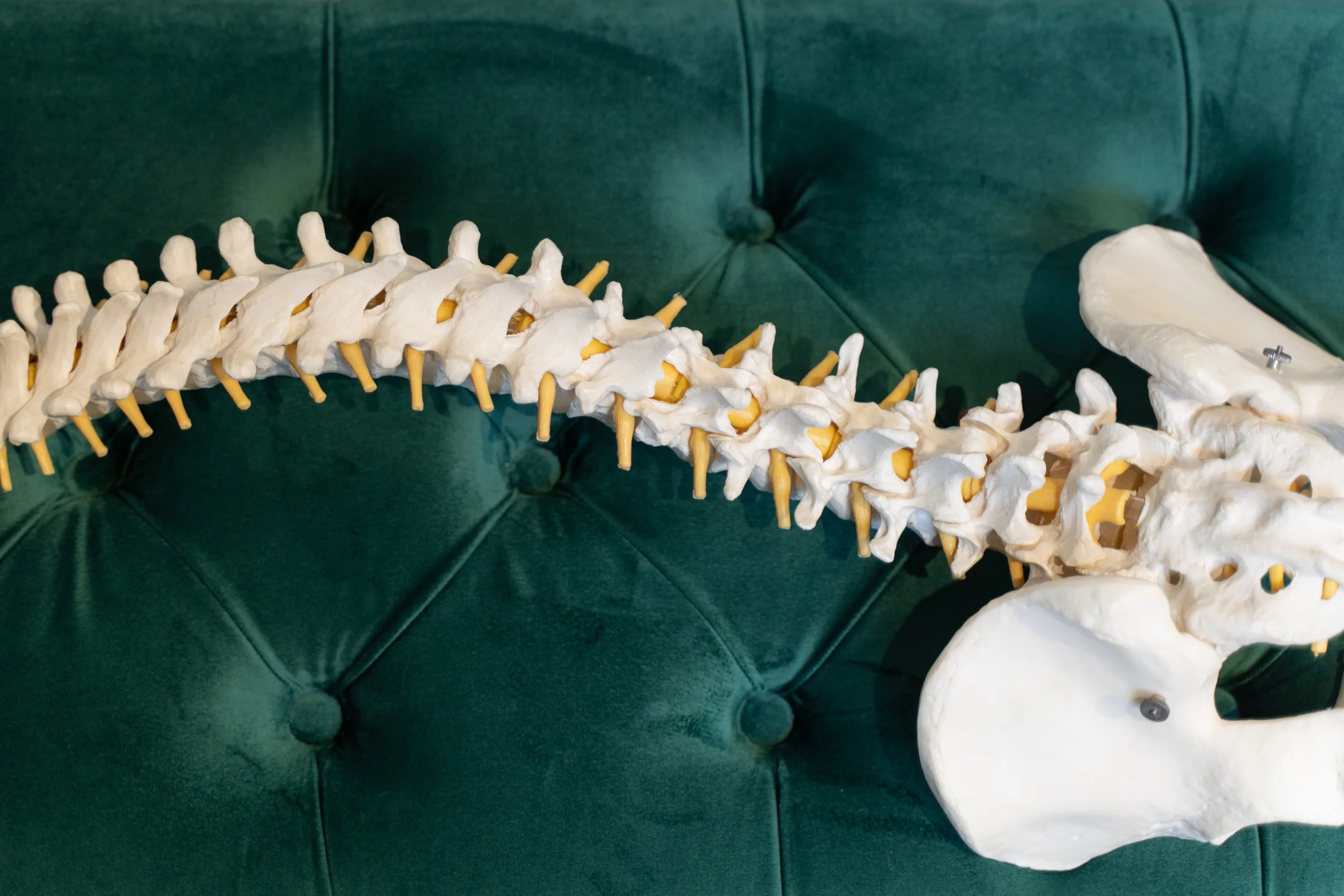
Taken together, his history and examination suggested a lumbar disc herniation causing irritation of one of the nerves in his lower back. It explained why his symptoms felt so dramatic and it explained why sneezing had been so painful.
Was it really the sneeze that caused it?
Not quite.
As we talked more, another story emerged. Mike had spent weeks sitting for long hours at work. His back had been feeling tight on and off. The weekend before, he'd spent hours gardening and carrying bags of compost. The sneeze wasn't powerful enough to suddenly destroy a healthy disc. Your discs are actually rather robust! It was the final increase in pressure on tissues that were already struggling to cope. In other words, the last straw on the camels back.
That's why so many people tell us their back "went" while coughing, tying their shoes or picking up a toothbrush. The final movement is rarely the whole story.
The next steps
Our first goal was to help him feel safe moving again. We explained what we believed was happening, what symptoms we expected to improve over time and the signs that would mean he needed urgent reassessment. Hands-on treatment was introduced carefully and only within his tolerance. We combined this with advice on comfortable positions, gentle movements to reduce stiffness and exercises that could be progressed as his symptoms settled. We found that acupuncture really helped Mike’s muscles settle, allowing us to do more in the sessions.
As the severe pain eased, we gradually introduced rehabilitation to improve the strength and endurance of the muscles supporting his spine and to help him regain confidence in movement.
Unfortunately with disc herniations, progress can fluctuate. There were good days and there were frustrating days. But week by week, he could stand a little straighter, walk a little further and sleep a little longer.
The pain in his leg gradually settled, his strength improved and he returned to doing the things he loved without constantly worrying that the next sneeze would put him back where he started.
